IN SHORT
Collagen is the main structural protein that keeps skin looking firm and elastic, and its natural production declines with age. Collagen in creams is a large molecule, so it doesn't pass into the deeper layers of the skin and replace the collagen there; it holds moisture on the skin's surface, forms a thin protective film and so helps the skin look plumper, smoother and more elastic. The best results come from using a collagen moisturiser together with vitamin C, consistent care and daily sunscreen.
"With collagen" is one of the most sought-after labels in skin care. From the mid-thirties onwards especially, people who notice their skin no longer looks as plump and elastic start looking for a collagen cream. So what does a collagen cream actually do, and what doesn't it do? In this guide we explain what collagen is, how it works in creams, who can use it and how to add it to a routine, in realistic terms.
What is collagen?
Collagen is the most abundant protein in the body. In the skin it works like scaffolding in the middle layer (dermis): together with elastin and hyaluronic acid it keeps skin looking firm, elastic and plump. From the mid-twenties the body's collagen production slowly declines. Sunlight, smoking, poor sleep and irregular care can speed this up. As a result, skin starts to look thinner, drier and more prone to fine lines.
What does a collagen cream do?
The collagen used in creams (and hydrolysed collagen, its smaller broken-down form) attracts and holds water. So the real strength of collagen creams is hydration:
- Reduces moisture loss: forms a thin, breathable film on the skin's surface that slows evaporation.
- A plumper look: well-hydrated skin looks plumper, and fine dryness lines become less visible.
- Softness and a feeling of elasticity: with regular use the skin feels smoother and more supple.
- Barrier support: helps reduce tightness and flaking, especially in dry and mature skin.
Does the collagen in a cream replace the skin's collagen?
No, and knowing this matters for realistic expectations. The collagen molecule is too large to pass beyond the skin's outer layer; hydrolysed collagen is smaller, but most of its effect is still at the surface. So a collagen cream doesn't "put back" the skin's own collagen; it works through hydration and the look of texture. To protect and support the skin's own collagen, these steps stand out:
- Sunscreen every day: UVA rays are the biggest external factor in collagen breakdown. Dr. Atabay SPF 30 Collagen Sun Cream is one option for this step. Why sunscreen every day?
- Vitamin C: an antioxidant known to support the skin's collagen. Dr. Atabay Vitamin C Serum combines hydrolysed collagen with vitamin C. See our vitamin C article.
- Retinol and peptides: among the most studied ingredients for collagen support in mature skin; sensitive skin should start with a low strength and build up gradually.
- Hydration: humectants like hyaluronic acid support a plump look together with a collagen cream. What is hyaluronic acid?
Who can use it?
- People 35+ starting to notice signs of maturing skin: daily hydration support for loss of elasticity, fine lines and dullness.
- Dry and normal skin: these skin types benefit most from collagen's moisture-holding property.
- Combination skin: choose a lighter collagen cream and apply less to oilier areas.
- Anyone whose skin feels tight during seasonal changes and in winter. See also our autumn-winter care guide.
Day, night, eye and mask: which for what?
- Day cream: light texture, all-day hydration. Dr. Atabay Anti-Aging Collagen Cream goes on after serum in the morning, followed by sunscreen.
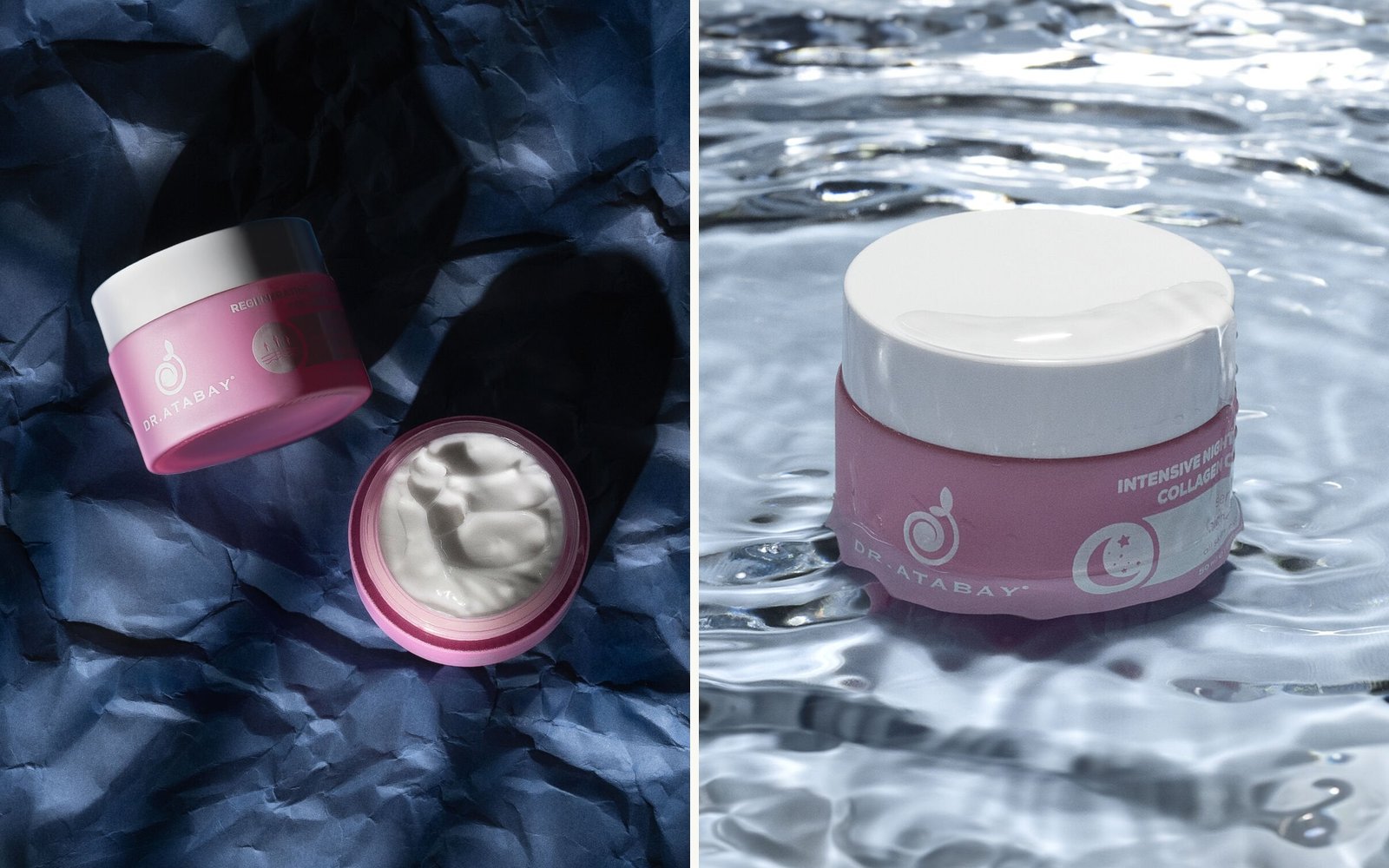
- Night cream: richer, more nourishing texture; skin is more open to renewal at night. Dr. Atabay Collagen Night Care Cream is the last step of the evening routine.
- Eye cream: the skin around the eyes is very thin; choose a product made for this area rather than a face cream. Dr. Atabay Collagen Eye Contour Cream. For choosing one, see how to choose an eye cream.
- Mask: intensive hydration once or twice a week. Dr. Atabay Hydrating Collagen Mask combines collagen with shea butter and panthenol.
A sample routine
Morning: cleanser → vitamin C serum → collagen day cream → eye cream → sunscreen.
Evening: cleanser → (optional) hyaluronic acid serum → eye cream → collagen night cream.
Once or twice a week: collagen mask after evening cleansing.
For the order of products, see our skin care order guide; for a routine by age, our skin care after 40 article.
When will I notice a difference?
Hydration and softness are usually felt within the first days. Changes in the overall look of texture and plumpness need at least 4–8 weeks of regular use. A collagen cream doesn't remove marked sagging or deep wrinkles; for these, see a doctor.
IMPORTANT
This article is for general information. Cosmetic products do not replace medical treatment. Patch-test a new product on a small area first; if redness, itching or stinging doesn't settle, stop using it and see a doctor.
Frequently Asked Questions
What does a collagen cream do?
A collagen cream holds moisture on the skin's surface and reduces moisture loss, helping the skin look plumper, smoother and more elastic.
Does collagen in a cream penetrate the skin?
The collagen molecule is too large to reach the skin's deeper layers. Its effect is mainly at the surface, through hydration and the look of texture; it doesn't replace the skin's own collagen.
At what age should I use a collagen cream?
There is no fixed age; it is usually chosen once loss of elasticity and fine lines start to show, often from the mid-thirties. Dry skin can use it earlier.
Should a collagen cream be used at night or during the day?
Either. A lighter collagen cream with sunscreen on top during the day, and a richer collagen night cream in the evening.
How can I protect my skin's own collagen?
Daily sunscreen is the most important step. Products with vitamin C, retinol and peptides, good hydration, sleep and avoiding smoking also help.