IN SHORT
The basic rule: apply products from the thinnest, most watery to the richest and oiliest. Morning: cleanser → toner → serum (e.g. vitamin C) → eye cream → moisturiser → sunscreen. Evening: make-up remover and cleanser → toner → serum → eye cream → night cream. Sunscreen is always the last step of the morning routine.
Even with good products on your shelf, the order you apply them in affects how they feel on your skin and how well they spread. If a rich cream goes on first, a watery serum applied afterwards struggles to reach the skin; anything applied on top of sunscreen can disturb the protective layer. In this guide you will find a step-by-step chart for morning and evening routines and the most common mistakes.
The logic of layering: thin to thick
Water-based, light products spread easily on the skin; richer products containing oils and creams form a layer on top that helps keep moisture in. So the general rule is:
- liquid, watery textures (toner, essence) first,
- gels and serums in the middle,
- creams and oils after,
- and in the morning, sunscreen last.
If you are unsure about a product, look at its texture: apply the more fluid one first.
Morning routine: step by step
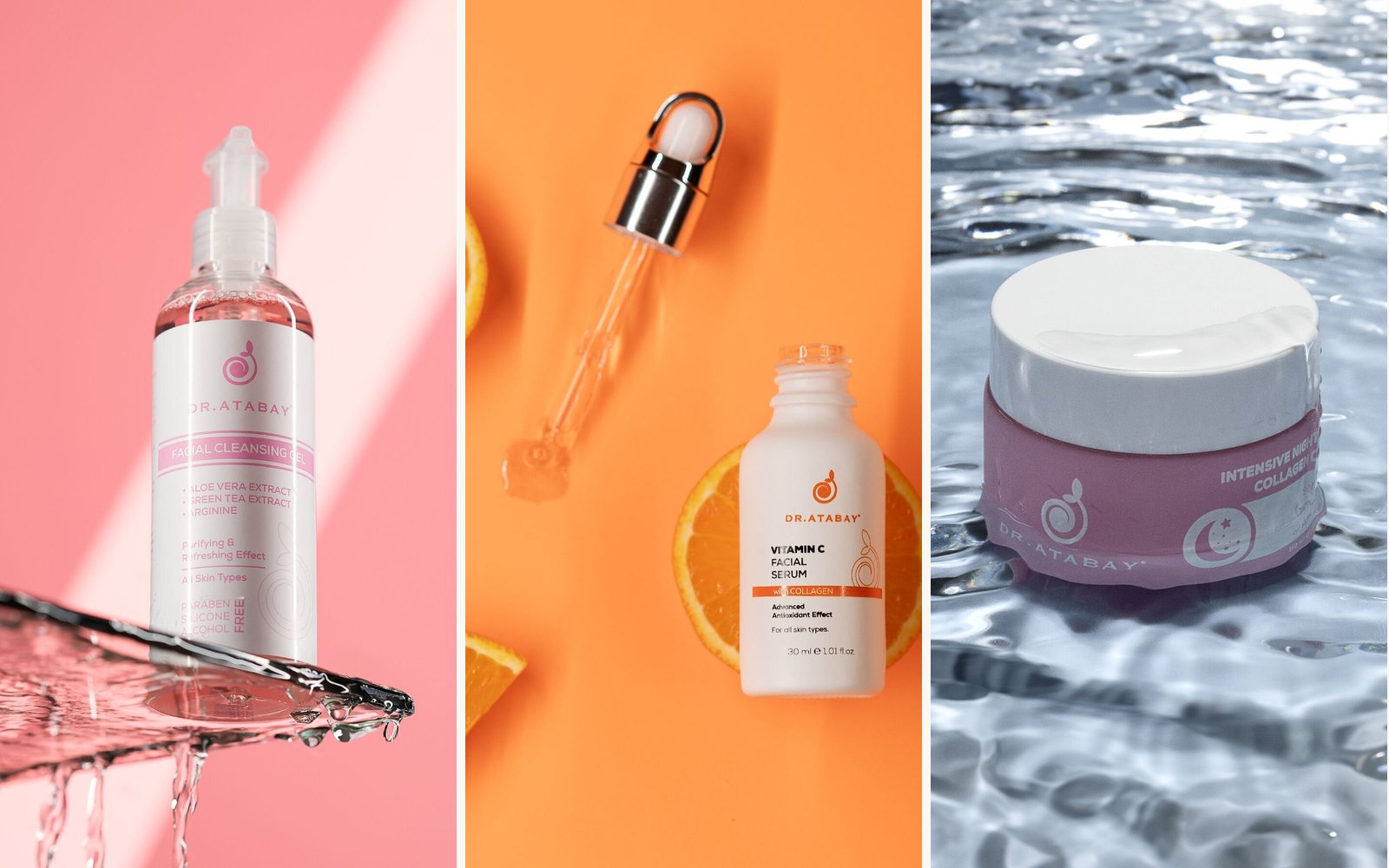
- Cleanser: removes sebum and product residue built up overnight. For dry and sensitive skin, lukewarm water or a very gentle gel may be enough in the morning. Dr. Atabay Facial Cleansing Gel and VENRÊVE Gentle Cleansing Gel are gentle gel options. See our cleanser guide to choose for your skin type.
- Toner: refreshes the skin after cleansing and prepares it for the next steps. VENRÊVE Refreshing Facial Toner is an alcohol-free, refreshing option. We explain which toner suits you in our toner guide.
- Serum: in the morning an antioxidant serum supports the skin against everyday environmental factors. Dr. Atabay Vitamin C Serum suits this step. Read why it is preferred in the morning in our vitamin C article.
- Eye cream: goes on before face cream, so the richer face cream is not carried into the eye area.
- Moisturiser: keeps the skin hydrated and creates a smooth base for sunscreen.
- Sunscreen: always the last step. Use about two finger-lengths for face and neck and reapply every 2 hours outdoors. Dr. Atabay SPF 30 Collagen Sun Cream is designed as the final step of the morning routine. If you wear make-up, wait a few minutes for sunscreen to set.
Evening routine: step by step
- Make-up removal: if you wore make-up or water-resistant sunscreen, start with a make-up remover.
- Cleanser: a second cleanse with a facial cleansing gel helps clear any remaining residue.
- Toner: as in the morning. If you use a toner with actives such as glycolic acid, prefer the evening and adjust frequency to your skin's tolerance.
- Serum: a hydration-focused serum is a good choice in the evening. Dr. Atabay Hyaluronic Acid Serum works best on slightly damp skin. If you use a retinol or anti-spot serum, apply it at this step as often as the product instructions say.
- Eye cream: a rice-grain amount on the bone around the eye socket. Applying it a little while before bed, rather than just before, reduces the chance of it moving into the eye overnight. See our eye cream guide for details.
- Night cream: the last layer of the day. Dr. Atabay Collagen Night Care Cream, with its rich texture that nourishes the skin overnight, suits this step. If you use a facial oil, apply it last, over the night cream.
Should I wait between products?
For most products there is no need for a long wait. 30–60 seconds for the previous layer to spread and settle is enough, and it also reduces pilling. Any exceptions are stated in the product instructions. In the morning, waiting a few minutes between sunscreen and make-up helps sunscreen form an even layer.
Which actives shouldn't be used together?
- Retinol and acids (AHA/BHA): if you are new to them, don't layer them on the same evening; alternate evenings.
- Vitamin C and retinol: a practical solution is vitamin C in the morning and retinol in the evening.
- Exfoliation days: on evenings when you use a scrub or a strong acid, pause other strong actives.
- New products: add one new product at a time and observe for a few weeks, so if your skin reacts you know which one it was.
The 6 most common mistakes
- Applying sunscreen before moisturiser.
- Applying eye cream after face cream, and taking it right up to the lash line.
- Applying serum to dry, tight skin; humectants such as hyaluronic acid feel more comfortable on slightly damp skin.
- Layering many strong actives on the same evening.
- Using too many products: more layers don't always mean better results.
- Changing your routine every few days: you need several weeks of consistent use to see results.
The minimum routine: are 3 steps enough?
Yes. If you are short of time, cleanser → moisturiser → sunscreen in the morning and cleanser → night cream in the evening is a solid foundation. Add serum, toner and eye cream on top as you need them. For routines adapted to age and season, see our routine after 40 and autumn-winter care articles.
IMPORTANT
This article is for general information. Cosmetic products do not replace medical treatment. If stinging, redness or itching after a product doesn't settle, stop using it and see a doctor. If product gets into your eye, rinse with plenty of clean water.
Frequently Asked Questions
Does serum go before or after moisturiser?
Before. Serums are thinner and more watery; moisturiser forms a layer on top that helps keep moisture in.
Does sunscreen go before or after moisturiser?
After. Sunscreen is the last step of the morning routine; if you wear make-up, apply it a few minutes after sunscreen.
Does eye cream go before face cream?
Yes. Applying eye cream before face cream keeps the richer face cream from being carried into the eye area. Apply eye cream on the bone around the eye socket, not at the lash line.
How long should I wait between products?
30–60 seconds is enough for most products. If a product needs a specific waiting time, it is stated in its instructions.
Do I have to use a toner?
No. A toner refreshes the skin and prepares it for the next steps; it can be skipped in a minimal routine. With active toners, adjust frequency to your skin's tolerance.