IN SHORT
Niacinamide is a form of vitamin B3 and one of the most versatile ingredients in skin care. It helps even out the look of skin tone, reduce the look of pores and shine, and support the skin's moisture barrier. Almost every skin type can use it, morning and evening, as a toner, serum or cream. It can be used with vitamin C, hyaluronic acid and retinol. Finish with sunscreen during the day.
Niacinamide has become one of the most common ingredients on labels in recent years. Some products list it as "niacinamide", others as "vitamin B3". The reason for its popularity is simple: one ingredient answers several skin care needs and is well tolerated by most skin. In this guide we explain what niacinamide is, which skin it suits, and at what strength and with which ingredients it can be used.
What is niacinamide?
Niacinamide (nicotinamide) is a water-soluble form of vitamin B3. It is a stable ingredient in skin care: it doesn't break down easily with light and air, and it fits easily into different textures (toner, serum, gel, cream). Being water-based, it is common in light, non-sticky formulas.
What does it do for the skin?
- A more even-looking skin tone: helps balance the look of spots and uneven colour. That is why it is often paired with brightening ingredients such as alpha arbutin, vitamin C and liquorice root extract.
- The look of pores and shine: by supporting sebum balance, it contributes to a more matte look with less visible pores in combination and oily skin.
- Moisture barrier support: helps the skin's outer layer hold on to moisture, which reduces dryness and tightness.
- A more balanced, smoother texture: with regular use it supports a brighter, smoother-looking skin.
Results vary with skin type, the product's formula and how consistently it is used. Changes in the look of tone and texture usually need several weeks of regular use.
Which skin types does it suit?
- Combination and oily skin: a good choice for shine and the look of pores. It is also a frequent choice in routines for blemish-prone skin.
- Dry skin: because it supports the moisture barrier, it works well with a moisturising cream or hyaluronic acid.
- Sensitive skin: usually well tolerated; still, it is wise to start with a lower-strength product and watch how your skin responds in the first weeks.
- Mature skin: together with peptides and antioxidants, it can be added to the routine for a brighter, more even-toned look.
What strength should you use?
In cosmetic products niacinamide is mostly used at 2–5%; some serums go up to 10%. A higher strength doesn't always mean better results. In some people high strengths can cause short-lived redness or stinging. If your skin is sensitive, start with a gentle, low- or medium-strength formula. If your toner and cream already contain niacinamide, you may not need an extra high-strength serum.
Where in the routine and how?
Niacinamide can be used morning and evening. Where it goes depends on the product type:
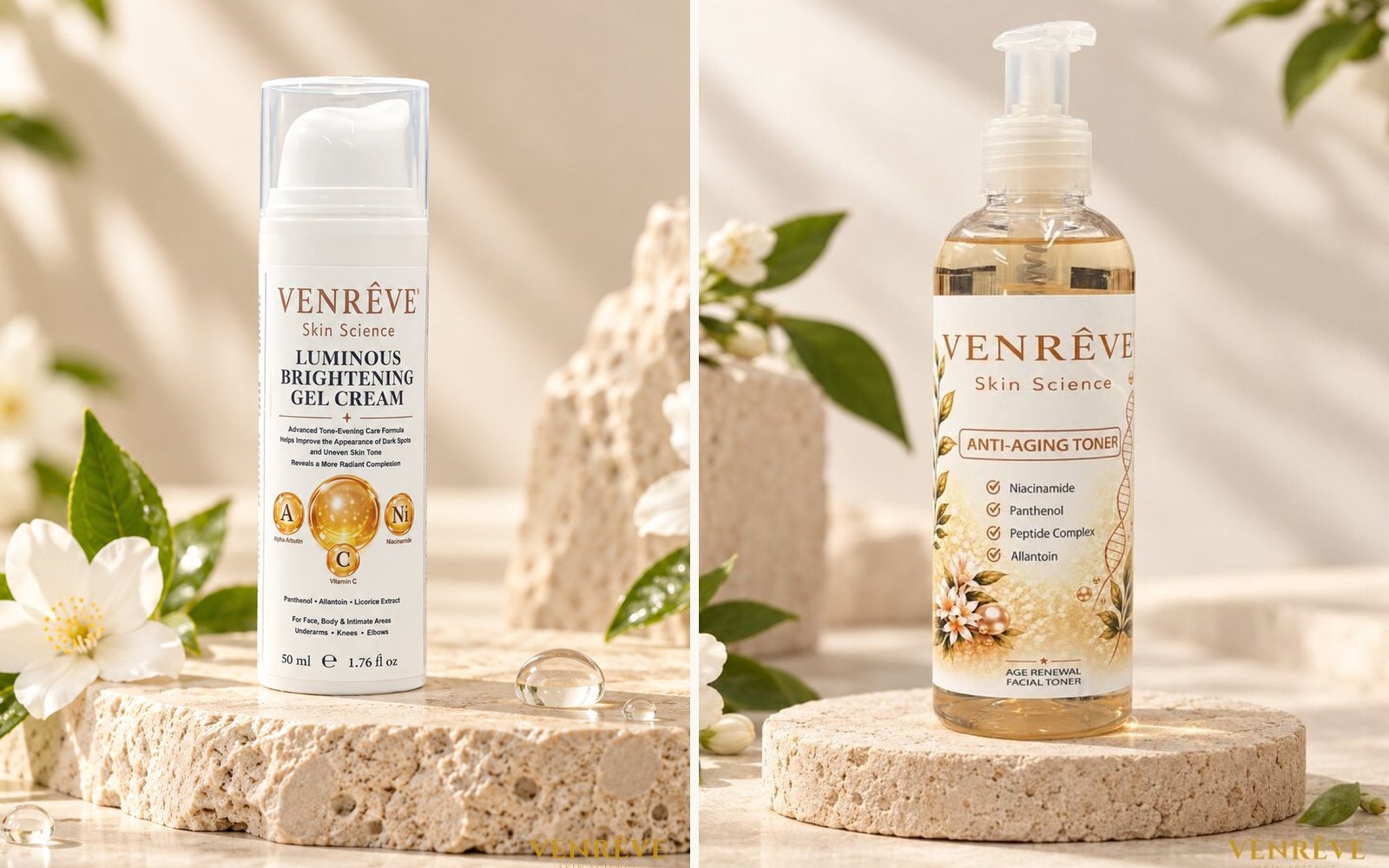
- Toner: after cleansing. VENRÊVE Age Renewal Toner contains niacinamide, panthenol and a peptide complex and needs no rinsing.
- Serum: after toner, before moisturiser.
- Cream / gel cream: after serum. VENRÊVE Luminous Brightening Gel Cream combines alpha arbutin, vitamin C, niacinamide and liquorice root extract and can be used on the face as well as on underarms, knees and elbows.
- Sunscreen (morning): the most important step in tone-evening care. Without sun protection, care aimed at the look of spots has limited effect.
For the general order of products, see our skin care order guide.
What can it be used with?
- Vitamin C: contrary to an old belief, they can be used together. Many brightening formulas contain both. See our vitamin C article.
- Alpha arbutin: a frequent pairing in tone-evening care.
- Hyaluronic acid: a good complement for hydration. Dr. Atabay Hyaluronic Acid Serum is a suitable option for this pairing.
- Retinol: can be used together; niacinamide's support for the moisture barrier can help the skin feel more comfortable while getting used to retinol.
- Glycolic acid and other AHAs: can be used together. For sensitive skin, alternating evenings may feel more comfortable than layering them on the same night. See this guide on using a glycolic acid toner.
Niacinamide and uneven tone: realistic expectations
Niacinamide is a supporting ingredient in care aimed at the look of spots and uneven tone; it is no miracle on its own. Sun protection, consistent use and patience matter as much as the ingredient. For causes of spots and a general care approach, see our dark spots article, and for colour differences on the body, our underarm darkening guide.
IMPORTANT
This article is for general information. Cosmetic products do not replace medical treatment. Patch-test a new product on a small area first; if redness, itching or stinging doesn't settle, stop using it and see a doctor. During pregnancy and breastfeeding, discuss the products you use with your doctor.
Frequently Asked Questions
Can niacinamide be used every day?
Yes. Niacinamide is usually well tolerated and can be used every day, morning and evening. For sensitive skin, start with a lower-strength product.
Can niacinamide and vitamin C be used together?
Yes. Many brightening formulas contain both.
Which skin types is niacinamide suitable for?
Almost all. It is chosen for shine and the look of pores in combination and oily skin, moisture barrier support in dry skin, and a more even-looking tone in mature skin.
Do I need sunscreen with niacinamide?
Niacinamide doesn't make skin sun-sensitive on its own, but daytime sunscreen is the most important step in any care aimed at skin tone and the look of spots.
How long does niacinamide take to work?
Hydration and comfort can be felt quickly. Changes in the look of tone and texture usually need several weeks of regular use.