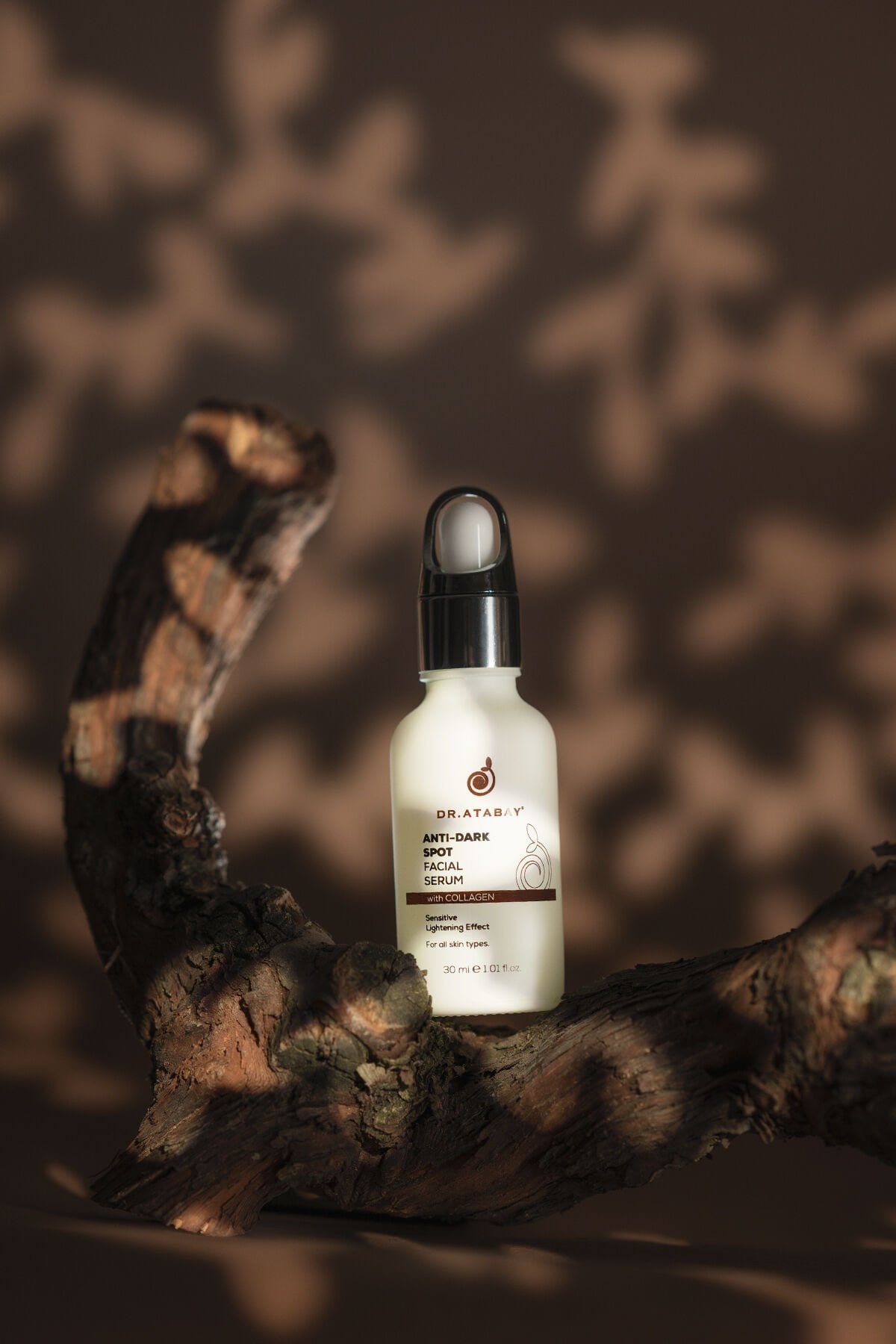
Sun spots, acne scars, or tone unevenness linked to hormonal fluctuations — skin spots can appear for many different reasons. Understanding the cause is the first step toward reducing their appearance.
Main causes of skin spots
- Sun exposure: UV rays can trigger melanin production, leading to sun spots.
- Post-acne marks: Dark marks left behind as inflamed blemishes heal.
- Hormonal factors: Tone unevenness often seen on the cheeks and around the upper lip.
- Age-related changes: As skin renewal slows, cumulative sun damage becomes more visible.
What can be done to reduce their appearance?
Serums supported by botanical extracts such as sea algae and sand lily may help reduce the appearance of tone unevenness with regular use. But the most critical step is prevention: never skipping daytime sun protection is the most effective way to reduce the risk of new spots forming.
Recommended routine
Evening: Cleanse → Anti-spot serum → Moisturizer. Morning: Cleanse → Vitamin C serum (antioxidant support) → Moisturizer → SPF 30 sunscreen (always).
When patience is needed
A noticeable change in the appearance of tone unevenness usually takes weeks, not months. Consistent, regular use is more effective than a single intensive application.
Frequently Asked Questions
Are skin spots permanent?
How permanent a spot's appearance is depends on its cause and depth. Superficial sun-related spots can fade over time with consistent care and sun protection, while deeper spots may require professional evaluation.
When should I use an anti-spot serum?
It is generally recommended for evening use, after cleansing. If used during the day, it must always be paired with sunscreen.
Does an anti-spot product work without sunscreen?
The effect of anti-spot products can be limited without sun protection, since sunlight can contribute to darkening existing spots and the formation of new ones.